In Japan’s crowded payments market, the Rakuten Credit Card remains a practical default for everyday spend, online checkout, and recurring bills.
Expect straightforward online onboarding, no annual fee on the standard card, and a points ecosystem that links to Rakuten Ichiba and other services.


Details in this guide were checked and updated in 2025, and key steps and rules reference official Rakuten pages cited inline.

What The Rakuten Credit Card Is
Rakuten’s standard card carries no annual fee and earns 1 Rakuten Point per 100 yen at typical merchants, with additional multipliers on Rakuten Group services such as Rakuten Ichiba during SPU events and campaigns.
Official pages outline the base earn and the SPU structure, including how Rakuten Card spend lifts the points rate on the marketplace subject to caps and periodic changes. Large parts of the appeal come from the surrounding ecosystem.
Utility payments, mobile and travel bookings, and daily shopping across partners feed points accumulation that redeem at face value in yen across many Rakuten properties. Campaign terms, exclusions, and caps apply, so checking the current offers before a big purchase helps maximize returns.
Eligibility, Documents, And Name Rules
Application success hinges on accurate identity information, consistent name formatting, and a bank account that matches the applicant.
Delivery requires face-to-face ID verification, and online bank linking fails when the account holder name does not perfectly match the cardholder.
The most common delays trace back to typos in the name fields or shortened middle names that break the e-NAVI bank setup flow.
Accepted IDs At Delivery
Delivery agents use Japan Post’s本人限定受取 or Sagawa’s受取人確認サポート, where a photo ID must be shown.
Accepted documents include a driver’s license, Japanese passport, Individual Number card, Residence Card, or a Special Permanent Resident Certificate, with some passport variants requiring a supplemental proof of address.
Plan to be available in person, since agents won’t hand over the card without verifying identity details against the application.
Name Entry Rules And Character Limits
Rakuten’s form collects your name in Kanji, Hiragana, and Roman letters; each field has strict limits and spacing rules, and the printed Roman name must fit brand-specific caps. Staying within the limits below keeps issuance and bank linking smooth.
| Field | Entry Limit And Notes |
| Kanji | 10 characters per section including spaces. |
| Hiragana | 15 characters per section including spaces; one space allowed. |
| Romanized name | Brand caps apply: Visa 19, Mastercard 21, JCB 24, American Express 21 characters including spaces. |
Bank Account Name Must Match
e-NAVI online bank registration rejects non-matching names, even if the person is the same, and paper registration has largely tightened as well.
As of March 1, 2025, mail-in registrations are generally declined when the depositor name differs from the card contract name, reflecting stricter security controls.
Use an account in the cardholder’s exact name and confirm the kana sequence matches your bank’s records.
Card Types And Key Costs
Rakuten offers several tiers across the same application channel. The standard Rakuten Card carries no annual fee and remains the recommended first card for most residents who want everyday acceptance plus ecosystem rewards.
The Rakuten Pink Card mirrors the standard earn with optional women-focused services. The Rakuten Gold Card carries a 2,200 yen annual fee and includes domestic airport lounge access up to two times per year plus other tier features that change by campaign.
Heavy travelers usually consider the Rakuten Premium Card for international lounge access via Priority Pass, bearing in mind recent usage limits introduced for 2025. Verify current benefits and any caps before choosing a tier.
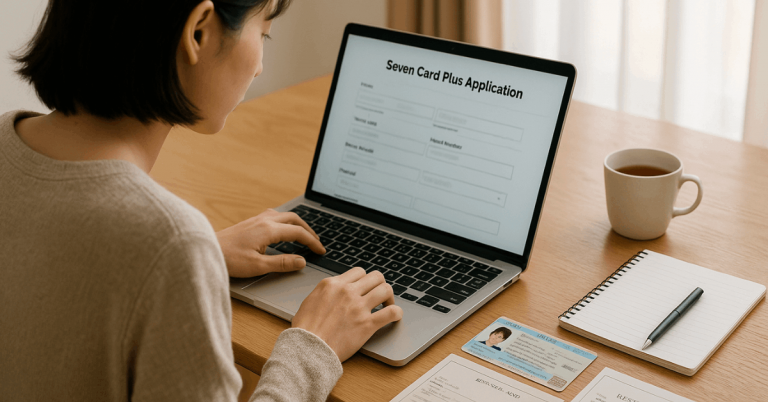
Step-By-Step: Online Rakuten Card Application
Five-step flow covers account setup, card selection, personal details, options, and bank linking. Keep documents ready and resist abbreviating names, especially if you have a middle name.
- Create or confirm a Rakuten account, then start the Rakuten Card application from the official campaign or product page. Select Visa or Mastercard, JCB, or American Express, then pick a design.
- Enter legal name in Kanji, Hiragana, and Roman letters observing the character caps, then provide birthdate, contact numbers, and email preferences. Ensure household composition, residence type, and duration are accurate.
- Choose the primary purpose of use, decline unwanted marketing, and decide on cash advance and revolving options only if needed. Revolving options carry 15.00 to 17.64 percent effective annual rates depending on card tier.
- Select add-ons such as Rakuten Edy, a Rakuten family card, or ETC card Japan, then set your PIN. Add-ons can be requested later through e-NAVI if uncertain today.
- Link a Japanese bank account in the cardholder’s exact name and confirm every field before submission. If online linking fails due to a name mismatch, follow the official guidance rather than retrying repeatedly.
Optional Features And Add-Ons
Rakuten Edy is a prepaid e-money feature using Sony’s FeliCa technology, and it supports auto-recharge when the balance dips below a chosen threshold.
Linking Edy to the card adds quick tap-to-pay utility in convenience stores and pharmacies, and the Edy terms and basic definitions are published in English for reference.
Drivers often add an ETC card Japan to pass highway tolls without stopping and to consolidate toll expenses on the same statement. Households can request a Rakuten family card for a spouse or immediate family member, noting that family-card charges always settle from the primary cardholder’s bank account.
Application Tips To Prevent Delays
Match ID and bank names exactly, including order and spacing, to avoid e-NAVI rejections. Stay within the Roman letter caps for the chosen brand to ensure the card prints correctly.
Avoid enabling revolving payment by default, since rates run 15.00 to 17.64 percent depending on tier. Keep a valid Residence Card ready for delivery, since couriers verify identity in person.
Schedule large Rakuten Ichiba purchases around SPU and “5 and 0” day boosts after checking current caps.
After Approval: Delivery, Activation, And Billing Date
Couriers deliver the card using identity-verified methods that require seeing an approved ID at the door or a counter. If a recent Japanese passport lacks an address page, carriers may require supplemental proof such as a utility bill or tax receipt.
Missed deliveries can be rescheduled, but long delays cause returns, so track the carrier notice sent by email. Statement closing is month-end for most purchases, and the withdrawal date is the 27th of the following month, shifting to the next business day when the 27th falls on a banking holiday.
Rakuten Ichiba purchases follow a special cutoff on the 25th, which can move some charges into the next cycle, so plan cash flow accordingly.

Fees, Rates, And Controls Worth Knowing
Installment transactions carry published effective annual rates that vary with the number of installments, while revolving balances accrue at 15.00 percent for Premium and Black and 17.64 percent for standard and Pink.
These figures appear across multiple official pages and calculators, and they can be simulated in e-NAVI before enabling a plan. Keeping the revolving option off and paying in full preserves the headline rewards rate and avoids compounding fees.
Quick Notes For Foreign Residents
Identity fields often ask for name order in Japanese formats, and furigana behavior can differ from other forms used in Japan.
If your middle name causes overflows in Kanji or Roman letters, follow the official advice rather than inventing abbreviations that will later block bank linking.
When in doubt, finish the card issuance first, then request a printed-name correction through support using the documented character caps.
Practical Timeline And What To Expect Next
Most applicants receive an acknowledgment email shortly after submitting the form, and issuance proceeds once identity and bank details clear.
Delivery requires being present with an accepted ID, then online account access through e-NAVI completes setup for alerts, statement viewing, and add-ons.
Spending on the card earns 1 Rakuten Point per 100 yen in general categories and higher rates in eligible Rakuten channels, subject to SPU rules and monthly caps.
Last Thoughts
In practical terms, the Rakuten Credit Card streamlines daily spend and predictable billing. Set names exactly as filed, match the bank account, and keep IDs ready for delivery.
Because rewards hinge on SPU timing and caps, plan bigger purchases around current campaigns and cutoff dates. After activation in e-NAVI, pay in full, rotate categories intentionally, and let points compound across Rakuten services.