In many countries, an Electronic Benefits Transfer system distributes food assistance through a secure payment card.
In the United States, the EBT Card delivers Supplemental Nutrition Assistance Program benefits at authorized retailers, replacing paper coupons and reducing fraud while improving convenience at checkout.


SNAP rules and amounts change periodically, so this guide focuses on current federal standards and the steps that lead to approval. USDA’s Economic Research Service and Food and Nutrition Service define what the card can buy, who qualifies, and how states must process applications.
What The EBT Card Is
An EBT card works like a debit card that holds monthly SNAP funds for grocery purchases at authorized stores and some farmers markets. Cardholders enter a personal identification number at the point of sale, and eligible food items are deducted from the balance automatically.
Program rules restrict purchases to food for home preparation and exclude alcohol, tobacco, hot foods in most cases, and nonfood goods such as pet food or household supplies.
Outside the United States, benefit names, eligibility thresholds, and card features differ by country and region, so local social protection agencies remain the primary authority for non-US programs.
Eligibility For SNAP
Meeting SNAP criteria starts with income, assets, and household composition, then moves to categorical exclusions and work rules.
States apply federal standards with small local variations, so checking the latest thresholds where you live prevents surprises at interview.
Income And Asset Tests
Gross monthly income generally must be at or below 130 percent of the poverty line, and net income at or below 100 percent after deductions.
For federal fiscal year 2026 (effective October 1, 2025 through September 30, 2026), 130 percent for a three-person household is $2,888 per month, while net income at 100 percent is $2,221.
Standard asset limits remain $3,000 for most households and $4,500 where at least one member is aged 60 or older or has a disability.
Who Is Not Eligible
Federal law excludes certain categories regardless of income, including people on strike, individuals without a documented immigration status, many full-time college students, and other limited groups defined in regulation.
State rules also define when immigrants with lawful status may qualify based on length of residence or other factors, so state SNAP agency guidance remains the best source for edge cases.
SNAP Work Requirements
Able-bodied adults without dependents often face time limits unless they meet work or training minimums.
Many states apply the three months in three years rule for adults aged 18 through 64 who are not exempt, alongside a requirement to work, volunteer, or participate in approved programs for 80 hours per month.
Exemptions commonly include pregnancy, verified disability, and living with a young child, although exact terms vary by state.
Documents To Prepare
A short preparation window gets applications processed faster and reduces back-and-forth after interview.
- Identity information for each applying member, typically verified using government-issued identification and taxpayer identification as required by state SNAP agencies.
- Proof of residency at the current address, for example a lease, mortgage, or recent utility bill.
- Proof of income covering earned and unearned sources, including pay stubs, unemployment, child support, and benefit letters.
- Expense proof for deductions, like child care costs, legally ordered child support, or out-of-pocket medical expenses for older adults or people with disabilities.
- Immigration or student status papers if they apply to your household.
How To Apply For An EBT Card
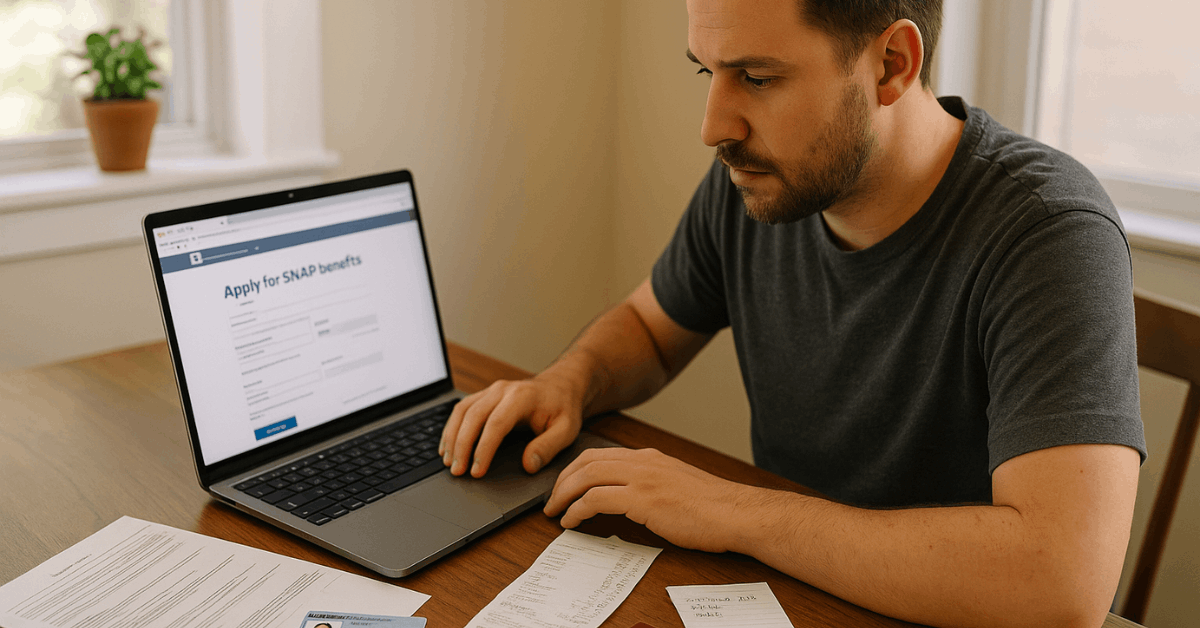
States offer online, mail, and in-person applications. A scheduled interview verifies the information and clarifies missing items, after which the agency issues a decision within federal timelines.
Online Applications
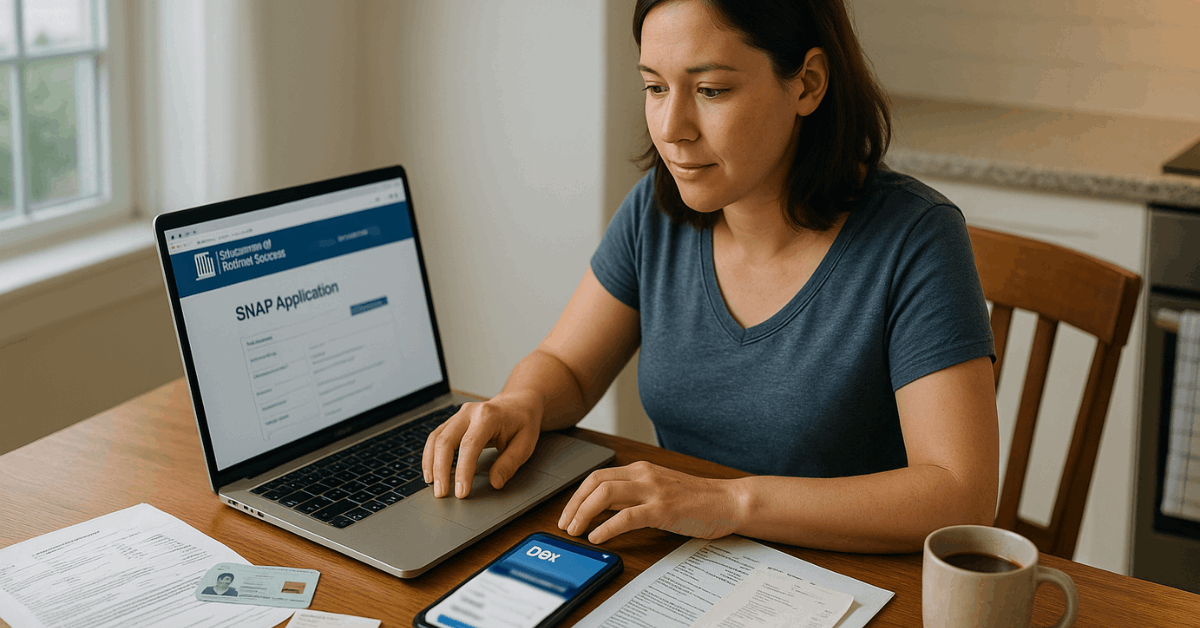
Most states provide secure online portals for SNAP applications digitally and allow document uploads and status checks after submission. Online filing locks in the application date and can speed scheduling, especially when documents are attached during the first upload.
Apply In Person Or By Mail
Local offices accept paper applications and document copies if online access is limited. Many states also permit secure drop-off at designated sites, and call centers can assist households that need language support or accessibility accommodations.
Interview And Processing Time
Federal timeliness rules require states to approve eligible households within 30 days, or within 7 days for expedited service when severe need is documented.
If an interview is missed, agencies must offer a second appointment within the 30-day window. Benefits begin on the application date for approved cases.
SNAP Benefits And Amounts
A clear view of potential benefits makes planning easier and helps you estimate the grocery budget supported by SNAP. USDA ties the maximum to the Thrifty Food Plan, then subtracts 30 percent of a household’s net income to calculate the final amount.
Maximum Monthly SNAP Allotments, FY 2026 — 48 States and D.C.:
| Household Size | Maximum Monthly Benefit |
| 1 | $298 |
| 2 | $546 |
| 3 | $785 |
| 4 | $994 |
| Each Additional Person | +$218 |
Example for context: a three-person household with $600 in net monthly income would see a 30 percent contribution of $180, so the monthly benefit equals $785 minus $180, or $605.
Alaska, Hawaii, Guam, and the U.S. Virgin Islands have higher maximums and different deductions; residents in those jurisdictions should consult their state or territorial SNAP pages.
EBT Card Use And Restrictions
SNAP covers most foods intended for home preparation, including fruits, vegetables, meats, dairy, breads, and seeds or plants that produce food.
Program rules prohibit alcohol, tobacco, vitamins or supplements, nonfood items, and hot foods at the point of sale except in limited, state-approved circumstances.
Retailers: How To Accept SNAP-EBT
Retailers and farmers markets follow a separate federal path to accept EBT, and the process begins only through USDA’s Food and Nutrition Service. No outside company can authorize a store, and there is no application fee.
A quick overview helps new applicants avoid common missteps and get terminals live promptly across locations.
Create A Login.Gov Account
Store owners start by creating a Login.gov account with email, a strong password, and multi-factor authentication, then link to the FNS retailer portal to begin the application.
Complete The SNAP Retailer Application
Applicants have 30 days to finish the retailer form, upload supporting documents, and identify each owner using information required for federal identity verification, as outlined by USDA’s Food and Nutrition Service.
Multi-store owners should confirm whether they qualify as an MSO for consolidated processing and monitoring.
Real-time status checks keep progress visible to staff. For questions, the SNAP Retailer Service Center supports applicants at 1-877-823-4369.
Authorization And FNS Number
Stores may not accept EBT until FNS issues formal authorization and a SNAP permit listing the location and FNS Number.
That number is required for terminal programming and when ordering point-of-sale services. Internet acceptance of SNAP requires separate onboarding under FNS Online Purchasing requirements after in-store authorization.
Choose POS Equipment
Most retailers must acquire and maintain EBT-capable terminals through a third-party processor. Certain entities, including eligible farmers markets and direct-marketing farmers, may qualify for no-cost EBT-only POS equipment through state programs.
Manual vouchers are permitted only during system outages or disasters, and in narrow legacy cases for older authorizations; ongoing business must run through electronic terminals.
Tips For A Smooth Application
A few disciplined steps reduce delays and help households or stores meet compliance standards on the first pass.
- Organize documents early to avoid interview rescheduling and benefit proration for missing verification.
- Report allowable expenses such as child care or qualifying medical costs so deductions lower countable income.
- Track interview notices and reschedule promptly if needed to stay within the 30-day window.
- Confirm eligible items at checkout to prevent declined transactions and appeals later.
- For retailers, compare processors on setup, monthly fees, and EBT service levels before signing contracts.
In Summary
Applying for SNAP and receiving an EBT card follows a predictable flow when documents and eligibility are clear. Federal timelines keep processing within 30 days in most cases, and current FY 2026 amounts set transparent maximums for planning.
Retailers move through a different FNS path that requires authorization, an FNS Number, and compliant EBT equipment before taking payments.
Households and stores that rely on official state portals and USDA pages will stay aligned with the latest rules and avoid unnecessary delays.
Notice: This article provides general information about SNAP and EBT programs. It does not collect personal information. Applications and document submissions should be completed only through official state or USDA websites and offices.